


















How to Store Perfume Properly: A Practical Care Guide
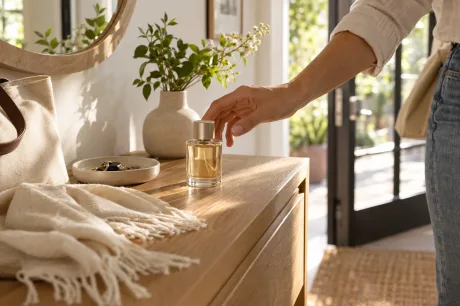
A favourite fragrance deserves a good place at home. A bottle on a sunny windowsill may look beautiful, but everyday storage habits matter to how a perfume keeps over time. Fortunately, caring for a fragrance usually starts with a sensible location and a few simple habits rather than complicated equipment.
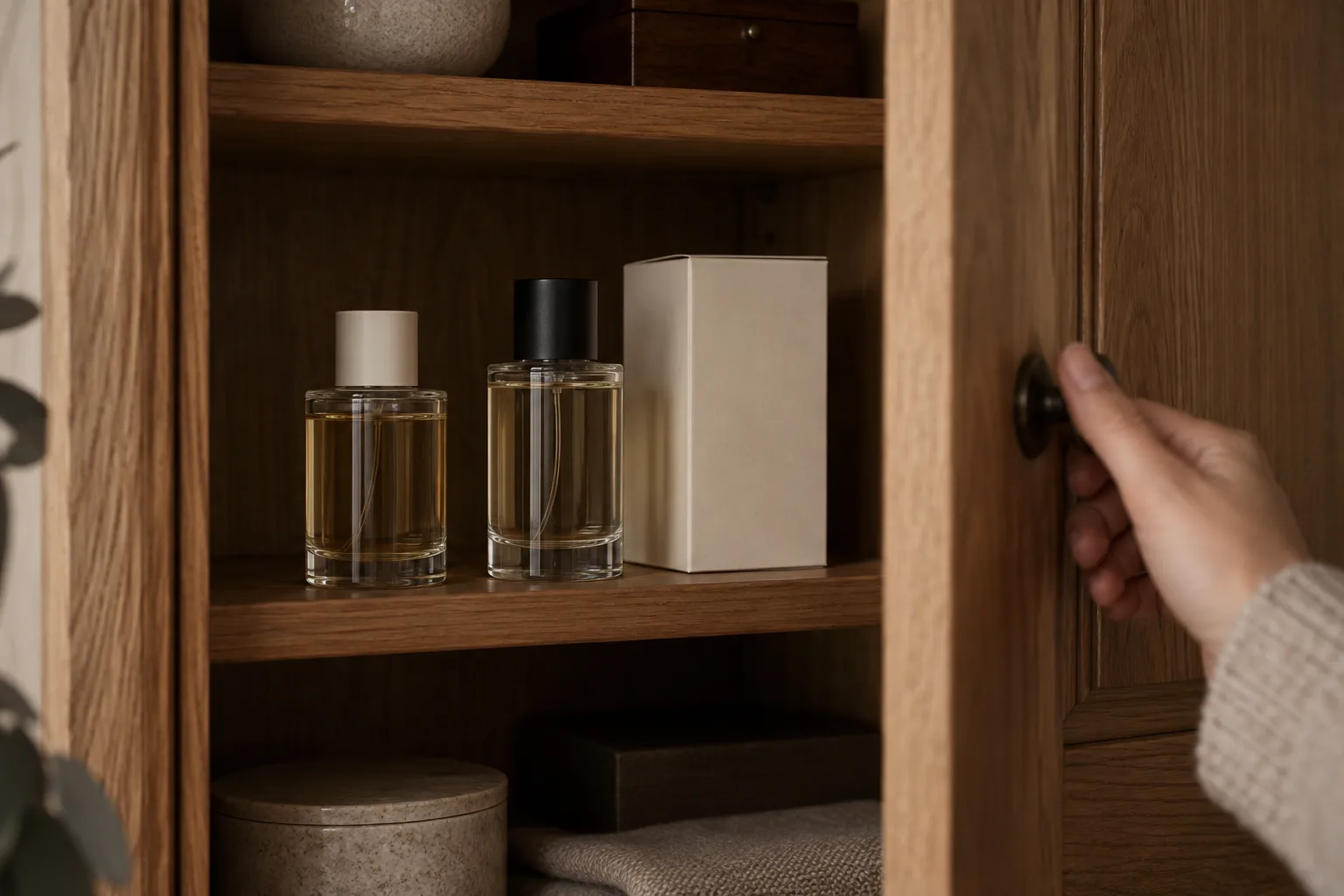
Store perfume in a dry place protected from light, away from heat sources and sudden temperature changes. A closed cupboard or drawer in a cooler room can be a practical choice. Always follow the storage instructions for the particular product first.
Why does perfume storage matter?
A fragrance formula is not unchanging. Light, heat and temperature fluctuations can alter a scent over time. Diptyque’s storage guidance recommends protection from these conditions. The practical step is straightforward: choose a consistent spot where the bottle does not become hot or receive direct sunlight.
Suitable storage helps you care for your collection, but it does not promise an unlimited shelf life. Condition also depends on the formula, packaging and how the perfume has been stored previously.
Where should you keep perfume at home?
Start with somewhere easy to reach and simple to close. You need not hide your fragrances so thoroughly that you forget them. One clear home for the scents you use regularly can make the routine easier.
- A closed bedroom cupboard. Check that it is not beside a radiator and does not become warm inside.
- A drawer. Allow enough room to prevent bottles knocking together and to close it comfortably.
- A wardrobe shelf. This can work if it stays dry, avoids excessive warmth and supports the bottles securely.
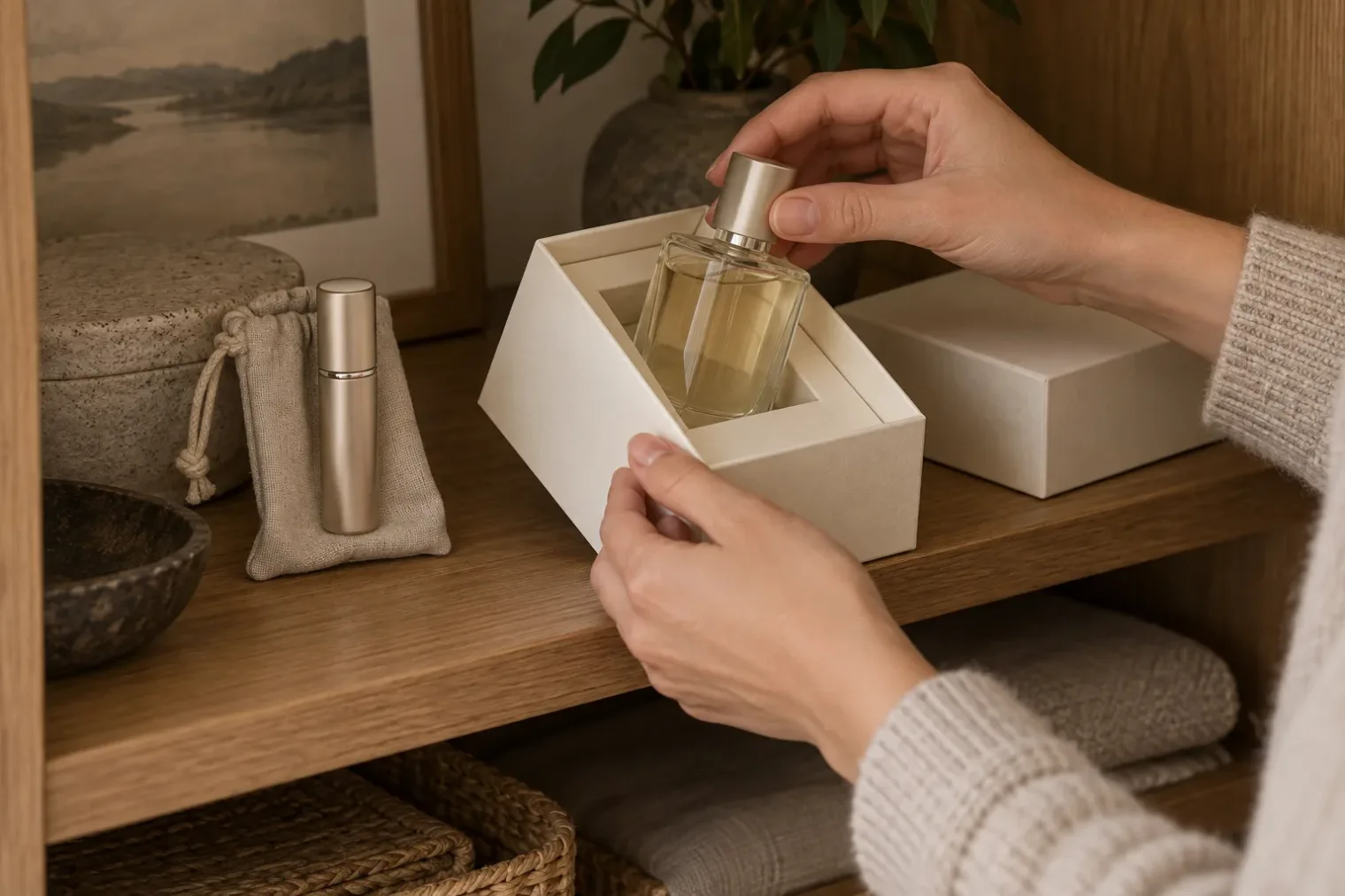
A cool, dry place and the original box for additional protection from light are also recommended in Jo Malone London’s fragrance care guide. Keeping the box can be useful if it fits comfortably into your routine.
Why are bathrooms and cars poor storage choices?
Showers change the temperature and humidity in a bathroom. Guerlain’s guidance advises protecting perfume from heat, light and humidity. A dry cupboard elsewhere at home is therefore often more practical than a shelf beside the shower.
Conditions inside a car are harder to control: the interior heats up in sunlight and cools later. Avoid making a door pocket or glove compartment your perfume’s permanent home. Bring a bottle you take out with you back indoors with your other belongings.
A windowsill, shelf beside a radiator or spot under a hot lamp is also a poor choice. An attractive display should not take priority over storage conditions.
Should you keep perfume in the fridge?
Refrigeration is not a universal requirement for every perfume. Check the manufacturer’s instructions first. Where special refrigeration is not specified, a practical starting point is a location protected from heat and light, with conditions that stay as consistent as possible.
Frequent movement between a cold and warm environment does not support the aim of avoiding temperature fluctuations. If your home is very hot and a suitable location is difficult to find, ask the seller or manufacturer about that particular fragrance. There is no need to assign one exact storage temperature to your entire collection yourself.
How should you care for the bottle?
CHANEL’s fragrance care advice highlights protection from heat and light and keeping the bottle securely sealed. Use your perfume as intended for its particular packaging.
- Replace the cap, where supplied, after use and check for leaks.
- Do not dismantle a fixed atomiser. In many spray bottles, the dispensing mechanism provides the seal while the outer cap protects it.
- Keep the bottle stable so it cannot fall or be crushed by other objects.
- If using a separate travel atomiser, choose a purpose-made container and follow its filling instructions.
Do not add water or other substances in an attempt to revive a fragrance. That would change the prepared formula without guaranteeing a return to its original scent.
How long can you keep an opened perfume?
There is no single timescale for every bottle. Check any expiry or period-after-opening information provided on the packaging. If the labelling is unclear, ask about the specific product rather than relying on a rule that all perfumes last the same number of years.
You can note the date you opened a bottle to keep track of your collection. This is especially helpful when using several fragrances at once.
What if the smell or appearance changes?
A pronounced unpleasant change in smell, unusual sediment or leaking packaging is a reason to pause and ask about the product’s condition. Colour alone is not a precise test of suitability: different formulas can change differently.
Rather than guessing or trying to repair the contents, photograph the packaging and note when the bottle was opened and where it has been kept. Contact the seller with that information. If you have doubts about the product’s condition, stop using it while you seek clarification.
Do perfume alternatives need different care?
The term “alternative” does not itself establish a separate set of storage rules. Follow the individual product’s instructions, care for its packaging and protect it from unsuitable conditions. A fragrance’s price is not a reason to give its care less attention.
Inspired perfumes can be an enjoyable part of an everyday collection. Choose a scent style you like and a bottle size you will realistically use. For an unfamiliar fragrance, a smaller bottle, where available, gives you time to get to know it. Explore our guides to choosing perfume alternatives and perfumes for everyday wear.
Frequently asked questions about storing perfume
Can I keep perfume in the bathroom?
A drier place with fewer temperature fluctuations is a better choice. A cupboard in a cooler room is generally more practical than a shelf beside the shower.
Do I need to keep the original box?
It can provide extra protection from light and preserve useful product information. If you no longer have it, choose a closed cupboard with suitable conditions.
Does a high concentration protect perfume from poor storage?
Do not treat concentration as protection against heat or light. Storage instructions matter regardless of how rich a fragrance feels.
Should I save perfume only for special occasions?
That is your choice, but good storage is not a promise of unlimited shelf life. It makes sense to choose a collection you actually enjoy wearing.
A small habit that cares for a favourite scent
Take a moment to review where your fragrances live: move bottles out of sunlight, check their packaging and choose a consistent shelf or drawer. A simple routine helps you look after what you already own.
When you are ready for something new, explore the Essence Valley perfume alternatives collection. Choose a fragrance you look forward to wearing and give it a suitable home.
Images were created with AI specifically for this article. They are conceptual illustrations, not photographs of particular products or packaging offered for sale.