





















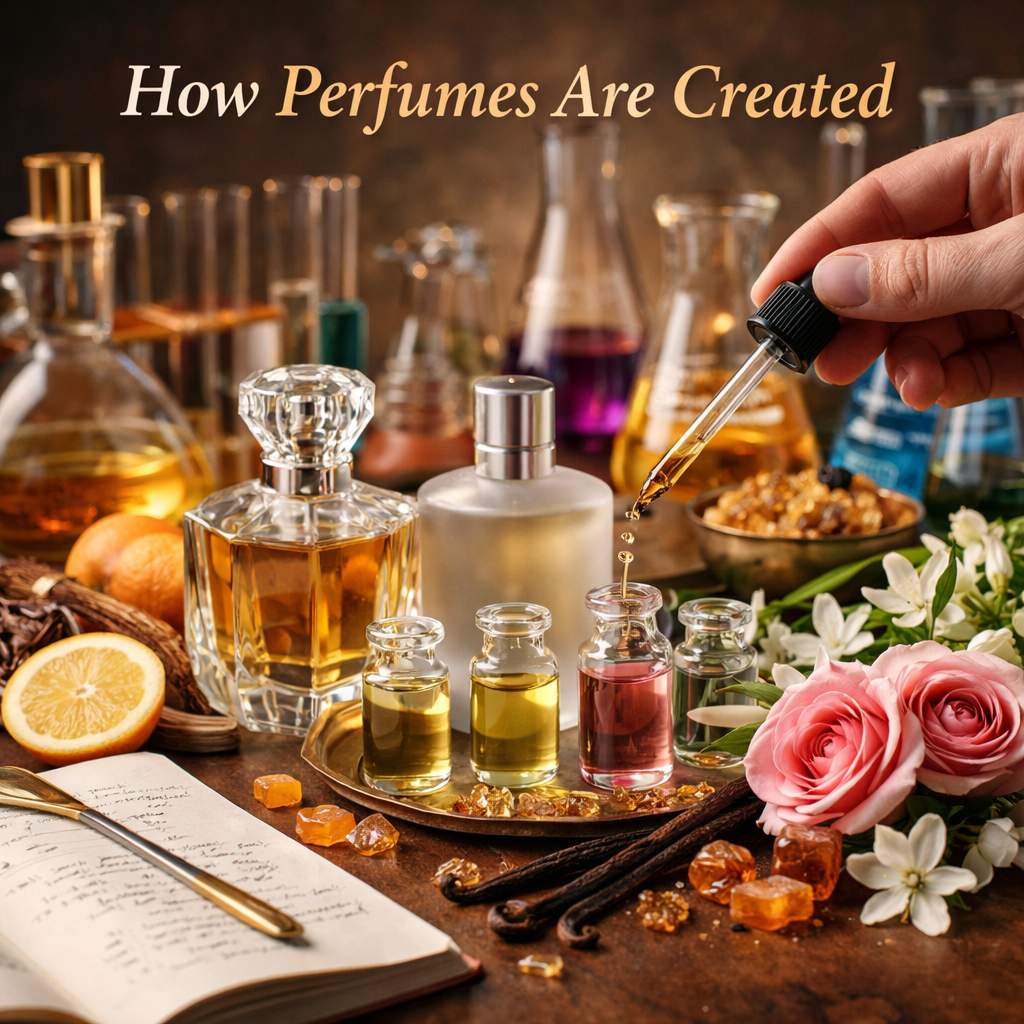
How Perfumes Are Created: From Idea to Fragrance
Creating a perfume is a complex process where art, chemistry, and creative intuition come together. Every fragrance begins with an idea — an emotion, a memory, or a specific atmosphere that a perfumer wants to express through scent.
Modern perfumery combines centuries-old traditions with advanced technology. Although perfume formulas can be extremely complex, the fundamental principles behind fragrance creation have remained largely unchanged for hundreds of years.
The Idea and Concept Behind a Fragrance
Every perfume starts with a concept. Perfumers often draw inspiration from nature, travel, emotions, or even works of art.
For example, a fragrance may be designed to evoke:
- a warm summer evening
- an exotic journey
- romantic emotions
- a feeling of elegance and luxury
This concept helps the perfumer decide which fragrance notes will be used and what overall character the scent will have.
Fragrance Notes and Their Structure
Most perfumes consist of dozens, sometimes even hundreds, of ingredients. These ingredients are organized into a structure known in perfumery as the fragrance pyramid.
The fragrance pyramid consists of three main layers.
Top Notes
Top notes are the first scents perceived immediately after applying a perfume. They are usually light and fresh.
Common top notes include:
- citrus
- bergamot
- lemon
- fruity accords
These notes typically last from a few minutes to about half an hour.
Heart Notes
Heart notes, also known as middle notes, emerge once the top notes begin to fade. They form the main character of the fragrance.
Common heart notes include:
- rose
- jasmine
- lavender
- spices
These notes usually last several hours and define the personality of the perfume.
Base Notes
Base notes appear last and last the longest on the skin. They provide depth and stability to the fragrance.
Typical base notes include:
- sandalwood
- cedarwood
- amber
- vanilla
- musk
Base notes can remain noticeable for many hours and are responsible for the lasting impression of the perfume.
Selecting the Ingredients
Perfume creation involves both natural and synthetic ingredients.
Natural ingredients are often extracted from:
- flowers
- woods
- fruits
- resins
- spices
Synthetic molecules allow perfumers to create entirely new scents that do not exist in nature. They also help stabilize fragrances and improve their longevity.
Creating the Fragrance Formula
Once the ingredients are selected, the perfumer begins building the formula. This process requires great precision because the balance between ingredients must be perfect.
Many different formula variations are usually tested before achieving the final composition. In some cases, creating a new fragrance can take months or even years.
Maturation and Testing
After the formula is finalized, the perfume must mature. During this period the ingredients blend together and the fragrance becomes more harmonious.
The perfume is then tested under various conditions:
- on human skin
- in different temperatures
- in different climates
This ensures that the fragrance performs consistently and maintains its intended character.
Conclusion
Perfume creation is a unique combination of science and artistic expression. From the initial idea to the final scent, the process requires creativity, patience, and technical knowledge.
This is why a well-crafted fragrance can become much more than just a pleasant smell — it becomes an emotional experience and a part of a person’s identity.


Add comment